
A New Chapter in Gestalt Theory: Gestalttheory.com Joins DBEM.org
July 24, 2023
DBEM.org, a prominent platform focused on psychology, social psychology, brain health, and nootropics, has recently incorporated Gestalttheory.com, a leading authority on Gestalt theory and therapy, into its expanding knowledge network. This development signifies a new era in the exploration and dissemination of these crucial and interconnected fields.
Overview of Gestalt Therapy And Gestalt Theory
Gestalt Therapy
Gestalt therapy is highly efficient existential experimental psychotherapy. The process is based upon the relationship between the therapist and the patient and the experience in the current moment or as it is called in Gestalt theory - «Here And Now». Gestalt therapist has a little different role than traditional psychotherapist. Being only an assistant in the course of the treatment and having deep understanding of Gestalt perception, Gestalt therapist manages to obtain necessary result with full involvement of the patient looking for improvement. The mutual work of both parties forms the behavior which eliminates the problem. At first it happens within the frame of the group session, and then the same behavior is transferred to the usual environment of the individual. The main accent is not on words, but on direct experience of the person.
Gestalt Concept
Gestalt therapy is based upon a number of perceptions and developed thanks to the works in psychoanalysis (William Reich), followers of field theory (Lewin, for instance), existentialism and experimental approach of Gestalt specialists. Different principles merged together or at least produced certain influence upon the Gestalt theory and shaped it the way we have it now. Conception of the whole, holism made the person self-regulating and independent entity and the Gestalt therapist regards the client as a functional whole striving towards maturity. The whole is more important than its separate parts taken together. Awareness conception came from the works of Reich and field theory influenced the Gestalt theory greatly too demonstrating that every individual should be taken in context of his environment.
Gestalt Approach
Different approach to previous experience of the client determined the methods which Gestalt therapy employs. The past of the patient is of no particular importance and Gestalt therapy does not concentrate on it, but uses it to solve the problem. As the past influences the decisions of the individual here and now, Gestalt therapist shows it to the person through the dialogue and experimental methods thus expanding the awareness of the person. The patient learns self-regulation and methods to tackle the load of the past, which is in the way of adequate perception of present events. One should accept oneself completely. The relief comes with full awareness. It will help to be free from the burden, which keeps the person captivated and directs the individuality. The development starts after the individual acknowledges pain of the past and only when the person becomes free from fear and nervousness. Patient is completely responsible for what he does and the alternative he or she chooses.
Fritz Perls, Founder of Gestalt therapy
Frederick or Friedrich Salomon Perls (July 8 1893, Berlin - March 14 1970, Chicago) entered the history as Fritz Perls, a famous psychiatrist and psychotherapist, the founder of Gestalt therapy, co-founded the Gestalt school of psychotherapy.
Fritz Perls developed absolutely new approach in psychotherapy. According to this theory, one of the primary objectives of Gestalt therapy is the ability to restore the self-awareness which is lost when a psychological disorder becomes evident. This is accomplished by restoring the individual's ability to differentiate, which helps the individual to identify what is and what is not a true part of the self, what provides the individual with a sense of self-realization and achievement and what leads to frustration.
Thanks to him the term of Gestalt therapy came into view. It is based on Gestalt psychology and Hans-Jurgen Walter's Gestalt Theory Psychotherapy. His wife Laura Perls also contributed to the development of the Gestalt psychotherapy.
Fritz Perls: The Architect of Gestalt Therapy
To fully comprehend the significance of this milestone, it's necessary to delve into the impactful legacy of Frederick Salomon Perls, known as Fritz Perls, the founder of Gestalt therapy. Fritz, alongside his wife Laura Perls, conceived Gestalt therapy, a transformative form of psychotherapy deeply entrenched in the principles of Gestalt psychology.
A Glimpse into Fritz Perls' Life and Influence
Fritz Perls' biography, accessible on Gestalttheory.com, offers a comprehensive perspective on his life and invaluable contributions. His ideology, epitomized in the Gestalt prayer, a classic expression of Gestalt therapy, promotes self-awareness and personal responsibility, underscoring the concept of the 'here-and-now.' A principal mechanism of Gestalt psychotherapy involves amplifying this consciousness to stimulate personal evolution and psychological well-being.
This holistic ideology permeates Fritz Perls' autobiography. It provides an intimate look at the origins of Gestalt therapy, drawn from Perls' experiences and insights. Fritz Perls, the founder of Gestalt therapy, his work, and the psychotherapy he propagated, remain instrumental in shaping the field of mental health.
The Fritz Perls Photo Gallery
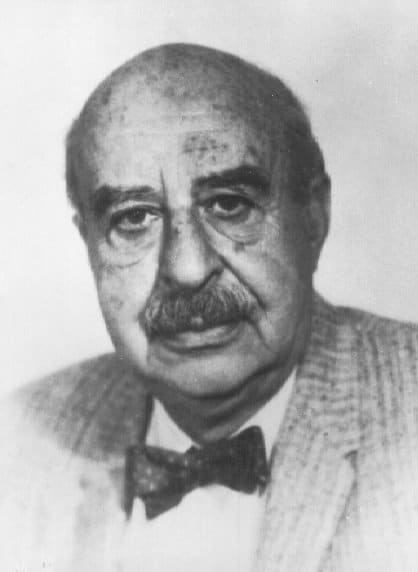
The Fritz Perls Photo Gallery, Frederick, and Laura Perls Photos, all found on the website, offer a visual chronicle of their lives and work. These images, which include rare captures from the esteemed Esalen Institute, shed light on the personal and professional journeys of the Perls, thereby enriching our understanding of the context within which Gestalt therapy emerged.
The Revolutionary Approach of Gestalt Therapy
Conceived by Fritz and Laura Perls, Gestalt therapy revolutionized psychotherapy. Gestalt psychotherapy, as expounded on http://gestalttheory.com/psychotherapy/, differs from conventional therapeutic methods by addressing individuals as a 'whole,' encompassing their thoughts, emotions, body, and social context.
This comprehensive approach addresses all layers of human existence and finds applicability in diverse therapeutic settings, including family therapy. Its influence extends beyond psychology, touching domains such as art, organizational development, and philosophy.
The Mechanisms of Gestalt Psychotherapy
Gestalt psychotherapy employs several distinctive mechanisms. The therapy revolves around the concept of Gestalt perception, which emphasizes the idea that 'the whole is greater than the sum of its parts.' This principle, central to understanding Gestalt therapy, suggests that we perceive objects as well-organized patterns rather than separate constituent parts.
Gestalttheory.com: A Veritable Resource
As a primary resource for anyone seeking to grasp this potent therapeutic approach and its applications, Gestalttheory.com has provided a wealth of information. It's been an invaluable resource for those interested in Fritz Perls, Laura Perls, Gestalt principles, and the history and applications of Gestalt therapy.
Gestalt Training and Family Therapy
The website has served as a platform for Gestalt training, offering resources for individuals interested in practicing or further studying this therapeutic approach. It also provides insights into how Gestalt principles can be applied to family therapy, demonstrating its adaptability across various therapeutic contexts.
Max Wertheimer: Co-founder of the Gestalt School of Psychology
Beyond Fritz and Laura Perls, Gestalttheory.com also explores the life and works of key figures like Max Wertheimer, a co-founder of the Gestalt school of psychology. His contribution to Gestalt theory, demonstrates the collaborative and multi-faceted development of this therapeutic approach.
The Future of Gestalttheory.com Under DBEM.org
With the acquisition by DBEM.org, the future of Gestalttheory.com promises to be vibrant and dynamic. DBEM.org's focus on various facets of mental health and cognitive enhancement makes it an ideal platform to deepen our understanding of Gestalt therapy within the broader context of psychology and brain health.
DBEM.org plans to retain the extensive range of information available on Gestalttheory.com while also expanding the website's scope by integrating its rich content with DBEM.org's existing focus areas. By bridging the gap between traditional psychotherapy methods and modern scientific developments in brain health and nootropics, this merger is poised to generate novel perspectives in psychology and mental health.
The Intersection of Gestalt Therapy and Daryl Bem's Work
The recent acquisition of Gestalttheory.com by DBEM.org signifies a meaningful confluence of two influential psychological perspectives: Gestalt therapy and Daryl Bem's work.
DBEM.org, a brain health, nootropics, and psychology platform, is known for its comprehensive archive of Daryl Bem's published works. Bem, an acclaimed psychologist, has contributed significantly to psychology's understanding of self-perception and sexual orientation. His works, primarily his self-perception theory and the exotic becomes erotic theory, have provided valuable insights into human behavior and experience.
In contrast, Gestalttheory.com, as the name suggests, is a focal point for all things related to Gestalt therapy, a therapeutic approach developed by Fritz Perls and furthered by many others like Laura Perls and Max Wertheimer. This therapy emphasizes the importance of self-awareness, the 'here-and-now,' and viewing one's experiences as an integrated whole.
There is an inherent compatibility between the core tenets of Bem's theories and Gestalt therapy that underscores the rationale for this acquisition. Both Bem's work and Gestalt therapy focus on enhancing self-awareness and understanding personal experiences and behaviors.
Intersection of Bem's Self-Perception Theory and Gestalt Therapy
Bem's self-perception theory postulates that individuals deduce their emotions and attitudes from observing their own behavior. Essentially, we understand ourselves by 'watching' ourselves, similar to how we comprehend others' emotions and attitudes by observing their actions. This aspect of self-perception aligns seamlessly with the core of Gestalt therapy that revolves around the promotion of self-awareness and living in the 'here-and-now.'
The connection is even more apparent when considering Gestalt therapy's emphasis on introspective analysis, where individuals actively perceive and interpret their actions and experiences. Bem's self-perception theory could indeed be viewed as a form of introspective analysis, further solidifying the relationship between these two psychological perspectives.
Connection with Bem's Exotic Becomes Erotic Theory
Moreover, Bem's exotic becomes erotic theory, which suggests a biological basis for sexual orientation, aligns with Gestalt therapy's holistic approach. Gestalt therapy considers both biological and psychosocial factors in its approach, creating a comprehensive understanding of individuals and their experiences. Bem's work and Gestalt therapy both strive to understand human behavior and emotions from a multi-faceted and integrative perspective.
Benefits of the Acquisition: Enhanced Understanding and Collaboration
The combination of these two sites—DBEM.org and Gestalttheory.com—allows for an exciting opportunity for cross-disciplinary research and understanding. The shared themes of self-awareness and introspection present in both Bem's work and Gestalt therapy can provide novel perspectives for understanding psychology and mental health.
Furthermore, the acquisition offers an avenue to foster deeper discussions and explorations of these complementary psychological theories. By creating a space where the works of Bem and the principles of Gestalt therapy coexist, DBEM.org could enable a more comprehensive approach to psychological research and therapeutic methods.
The integration of these two platforms promises to pave the way for a deeper understanding of human behavior, thought, and emotion.
Email: [email protected]
DBEM, 3209 N. Flood Ave, Norman, OK 73069
Copyright 2023 DBEM - Privacy Policy